It’s soon time for the doctoral degree conferment ceremony on 24 May. Several Honorary Doctors will be in town and giving lectures open to the public 22-23 May. If you’re also in town, you’re welcome to attend! See details below.
Honorary Doctors at the School of Economics and Management
Anders Dahlvig – “The transformation of retail and what it takes to succeed” When: 23 May, 13.00-14.00 Where: EC3:211, Holger Crafoords Ekonomicentrum EC3, Tycho Brahes väg 1, Lund Click here for more information
Professor Irvine Lapsley – “Unfinished Business: The NPM Story” When: 23 May, 11.00-12.00 Where: EC3:211, Holger Crafoords Ekonomicentrum EC3, Tycho Brahes väg 1, Lund Click here for more information
Honorary Doctors at the Faculty of Theology
Professor Corinna Körting – “A Look Behind the Scenes – Dreams and Visions in the Ancient Near East and the Old Testament” When: 23 May, 09.15 Where: LUX:C126, LUX, Helgonavägen 3, Lund
Mark D. Nanos – “Paul: Why Bother? A Jewish Perspective” When: 23 May, 10.15 Where: LUX:C126, LUX, Helgonavägen 3, Lund
Bruce Karstadt – “Mattering More: One Museum’s Story” When: 22 May, 17.15 Where: LUX:C121, LUX, Helgonavägen 3, Lund
Professor Helle Vandkilde – “Pile in Scania and the Beginning of the Nordic Bronze Age.” When: 22 May, 18.15 Where: LUX:C121, LUX, Helgonavägen 3, Lund
Professor Timothy Snyder – “Why Politics Needs History” When: 23 May, 19.00 Where: LUX auditorium, LUX, Helgonavägen 3, Lund Please note, ticket required. Tickets available at the LUX reception (open Mon-Fri 09.00-15.00)
Conversation with Milo Rau When: 23 May, 18.00 Where: INKONST, Bergsgatan 29, Malmö Ticket required. Click here for more information
Honorary Doctors at the Faculty of Engineering (LTH)
Professor José van Dijck – “The digital platform society: A European perspective” When: 23 May, 08.30 Where: MA1 in Annexet, LTH, Sölvegatan 20 entrance C Registration required. Click here for more information
Arne Staby – “Chemical engineering in the biopharmaceutical industry – Challenges and experiences” When: 23 May, 09.30 Where: MA1 in Annexet, LTH, Sölvegatan 20 entrance C Registration required. Click here for more information
Professor Tord Kjellström – “Reducing climate change related heat stress at work – The need to combine health and engineering science for global protection” When: 23 May, 10.30 Where: MA1 in Annexet, LTH, Sölvegatan 20 entrance C Registration required. Click here for more information
Honorary Doctors at the Faculty of Science
Stanley Micklavzina – “Physics demonstrations in formal and informal education” When: 23 May, 10.00-12.00 Where: Lundmarksalen, Astronomihuset, Sölvegatan 27, Lund
Professor Karin Åkerfeldt – “Peptide mischief: educating through undergraduate research in a collaborative setting” When: 23 May, 10.00-12.00 Where: Lundmarksalen, Astronomihuset, Sölvegatan 27, Lund
This week in the “LU Alumni around the world series” we meet Linda Karlsson, alumna from Equality and Diversity Management programme, class of 2014. After graduation, Linda moved down under, to Australia, to start a career with the goal to improve gender equality in the workplace.
You graduated from the Bachelor’s programme in Equality and Diversity Management in 2014. What have you been up to since your graduation? After graduation I moved to Brisbane in Australia where I had previously spent a one year exchange whilst completing my studies at Lund University. Whilst at University of Queensland I met my now partner and decided to go back once my degree in Sweden was completed. I started working on a joint project with the NSW Government, SBS Television and IES developing training programs in cultural competency and inclusion for the Australian workforce. I now work as the Social Impact Lead for an international jobs platform called WORK180. We pre-screen employers against a set of criteria to identify their level of support for women and gender equality in the workplace.
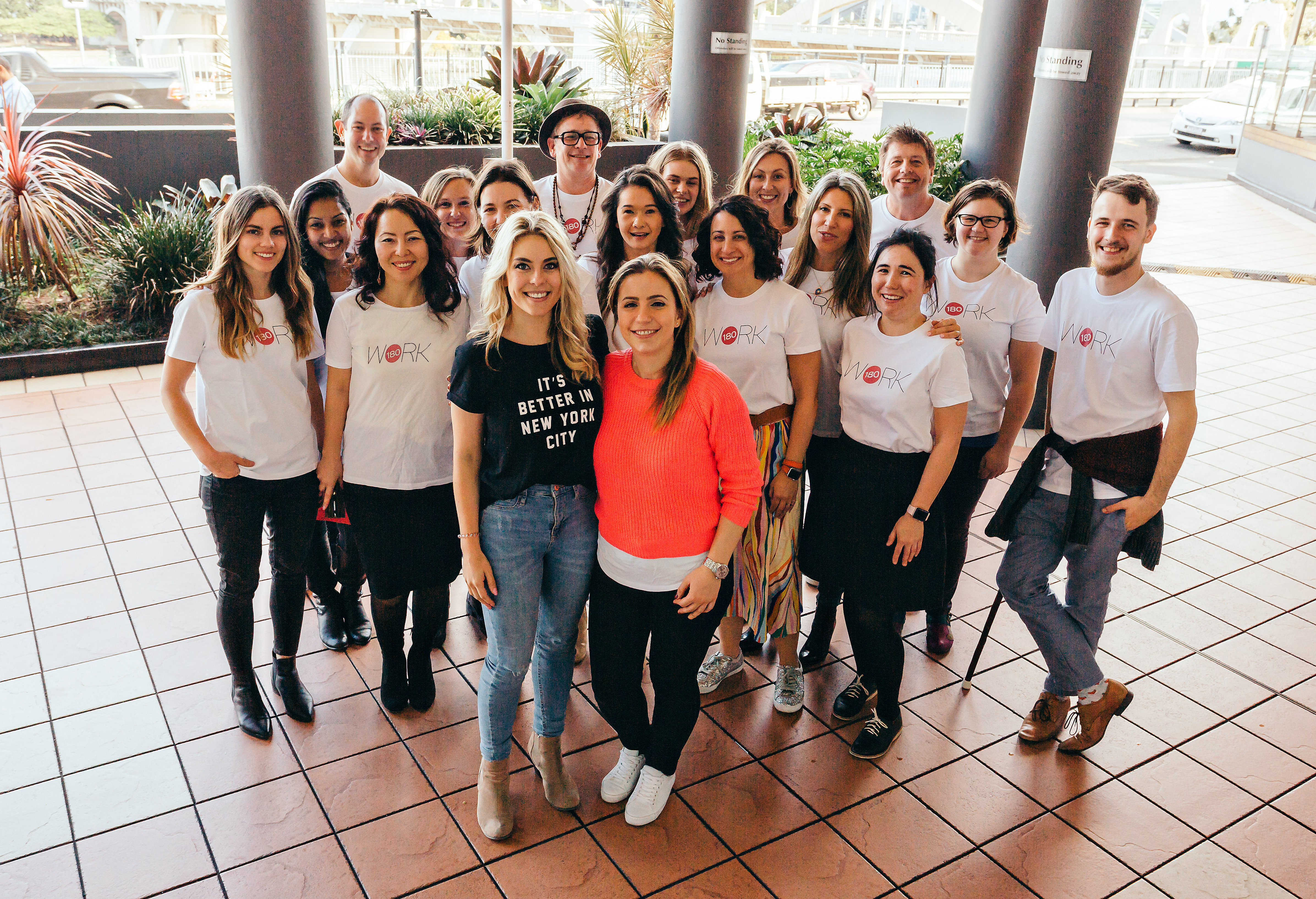
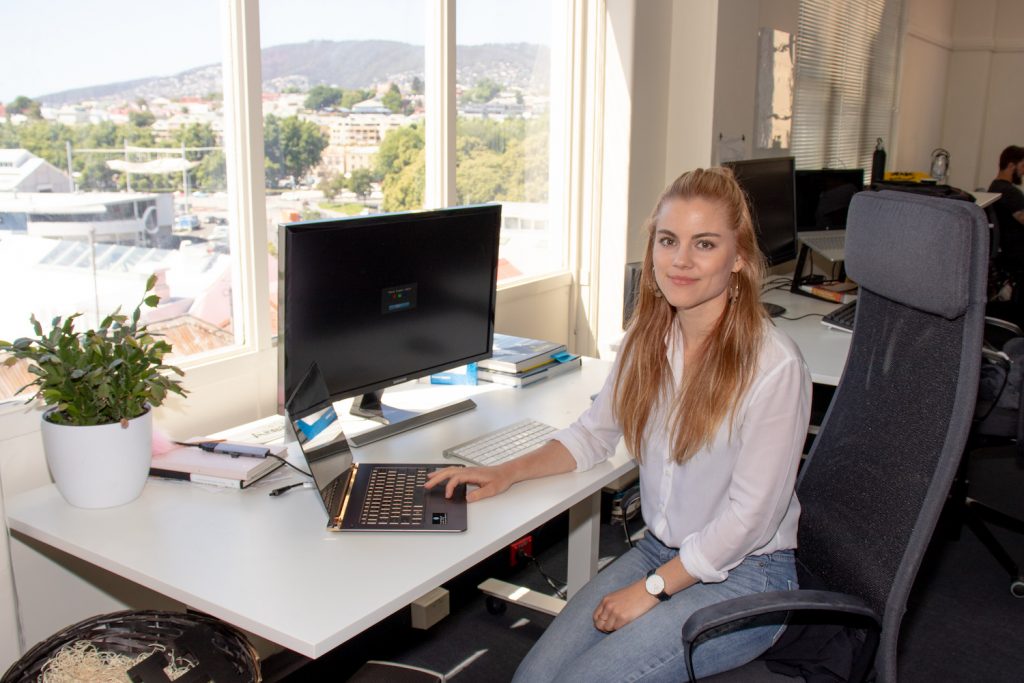
The WORK180 team
We’ve flipped the traditional jobs platform model on its head and shifted the power to job seekers. In a world’s first, women have access to information about employers and can make an educated decision before applying for jobs. Only jobs by endorsed employers can be advertised on the site. We also help employers improve their policies and develop a transparent and trustworthy employer brand.
What does your typical work day look like? WORK180 was founded in Australia in 2015 and we recently launched in the UK and we are entering the US market later this year. Everyday is a varied day. But it always starts with a coffee.
At the office
Over time we have expanded the team to being just a few of us doing everything, to more people coming on board for defined roles. At this point in time, my focus is on growing our partner network of organisations and association sharing our values.
I’m currently planning the campaigns we will run in 2019 in collaboration with employers and partners to raise awareness around various topics such as flexible working, access to paid parental leave, women in leadership and annual events such as International Women’s Day and SuperDaughter Day. Next week I’m also speaking with the organisation Women in Fire Services to see what we can do to improve gender diversity in the space and support their work. The other week I also attended a Symposium in Melbourne with Dr. Iris Bohnet and VicHealth, presenting a Case Study on how to use behavioural insights to fast track gender equality. Finally, I have a rather large article to write, summarising the social impact we have recorded last year and the incredible change we have seen in our network of endorsed employers. Oh and I also try to make sure I squeeze in a lunch time session at the gym during the day to help keep the energy levels up for the afternoon, I find that helps a lot. Along with coffee!
Has your Lund University education been beneficial in your work? In what ways? I absolutely loved my Equality and Diversity Management degree at Lund University, and it is truly amazing to be able to apply all the theoretical knowledge we were taught in my daily work life. I was also heavily involved in the student life at Lund and the Social Sciences Union. I believe this is equally as important to help prepare yourself for the workplace. Whilst at university, I also learnt how to manage my time really effectively which has proven helpful as I tend to have a lot of things going on simultaneously.
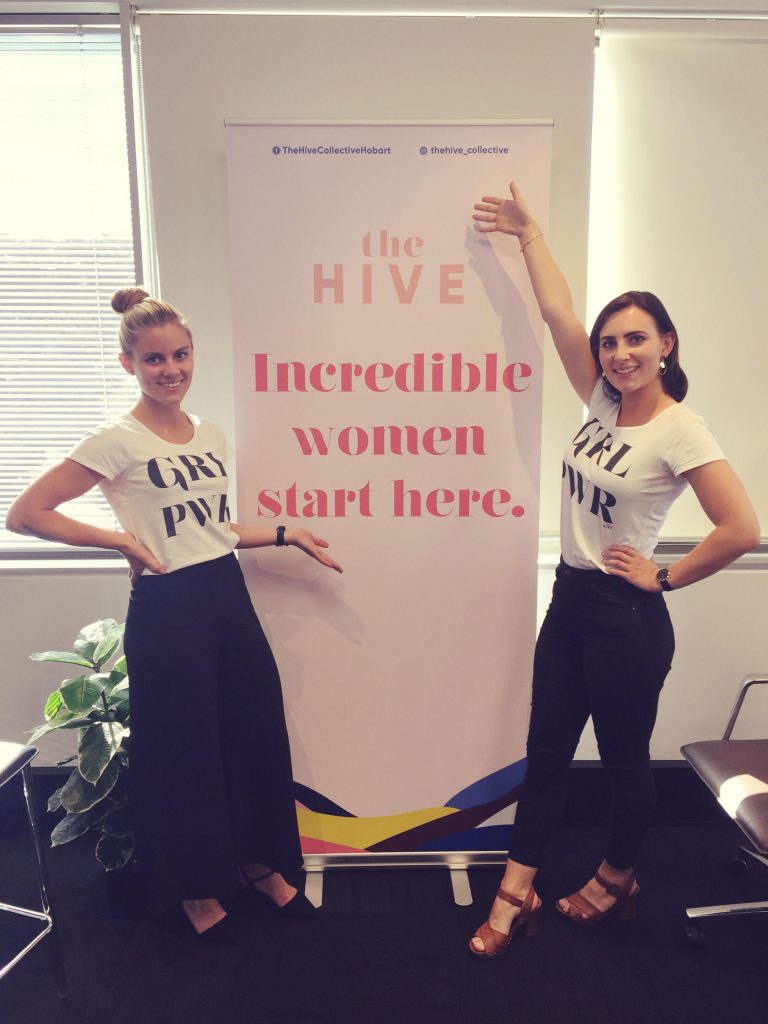
You are one of the founders of The Hive Collective. Can you tell us more about this project? The Hive Collective is a community-lead networking group run by women for women. It basically started in the office kitchen at this really hip tech company called LiveTiles, where the other co-founder Annie works. We both realized we had the same idea of wanting to start a network for mid-career women like ourselves. We wanted to create a supportive and inclusive collective, to connect, mentor and learn practical career advice and solutions from already successful women in business. Fast forward about 8 weeks and we had our first event with over 85 people registered!
Linda and Annie with the Hive banner
We were blown away by the support we received and interest in the group. We are soon hosting our second event with guest speaker Kathryn Morgan-Wicks, Secretary at the Department of Justice and one of the most senior women in the state public sector. We are really excited to grow the collective. Our biggest challenge right now is to find a big enough space for everyone on the night, it’s a pretty good problem to have!
What are the most enriching parts of working with diversity management? It’s incredibly rewarding to work on projects that truly create social change and contribute to making our world a better place. Coming from Sweden but working in Australia you quickly realise how far Scandinavia is when it comes to gender equality. Many of the things I’ve taken for granted growing up such as access to affordable childcare or paid parental leave for both parents is not a mandatory part of Australia’s workplace and society. Being part of changing this and setting a new standard for what to expect from an employer is a really fulfilling job to do.
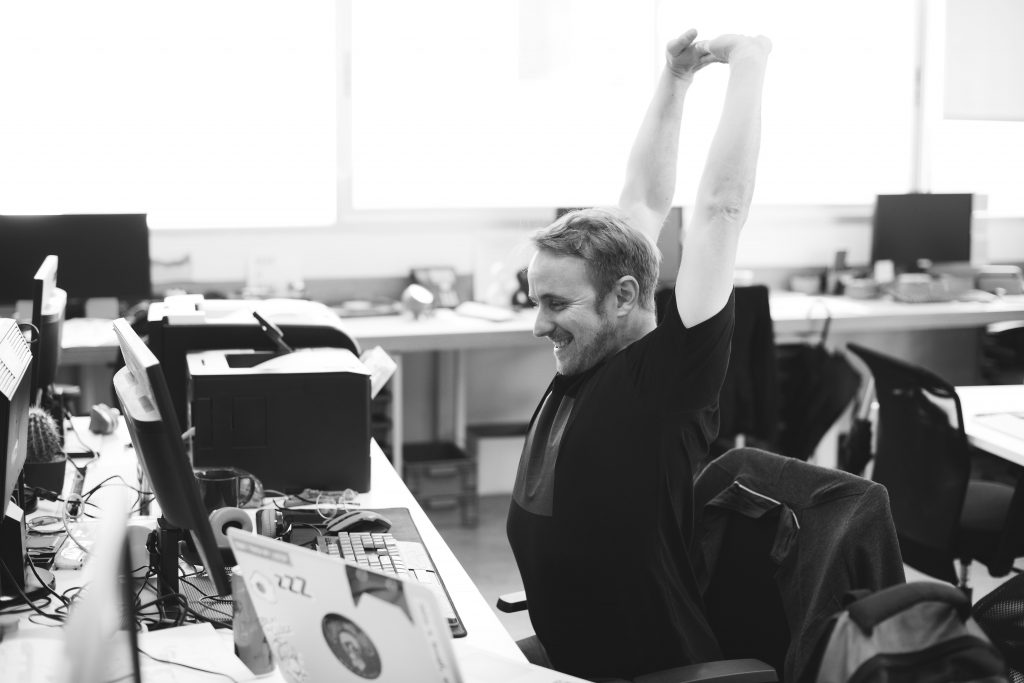
“A photo we took when building our library of stock images. This is me and my co-worker Marshie clearly doing something important on our computers haha.”
Where do you see yourself in five years? At WORK180, we have an ambitious mission of becoming the number 1 job platform for women globally. I see myself as part of this journey and I’m excited to think about the tremendous change we will be contributing to. Hopefully, at some point in a near future (five years from now?), we can look back at the work and comfortably say WORK180 is no longer needed.
The workplaces of the future are characterised by a digitised and boundless working environment in which we can largely control how, where and when we want to work. We are given new opportunities, but we also face new challenges. Are the workplaces keeping up with the rapid pace of development? And how do we get a sustainable working life – our whole life?
This was some of the questions that was discussed during the Work-Life Mingle that took place during the Sustainability Week at Lund University. The event was a collaboration between the Alumni Network, the City of Lund and Design Sciences at the Faculty of Engineering. Design Sciences conducts a vast amount of important research connected to the digitised worklife, leadership and work-life health.
During the event we took the opportunity to talk to some of the participants, an inspiring mix of students, alumni and university employees.
Name: Philip Work: Head of Education, internal affairs, at the Faculty of Engineering (LTH), Teknologkåren Studies: Engineering Physics, LTH
What are the most import factors for a sustainable work-life? It’s important to have a workplace culture that encourages you to pay attention to your own balance between work and free-time. What works for me and what doesn’t? It is also important to be attentive to your colleagues in case someone is working too much or is not feeling well. It’s not uncommon that students working full-time in a student union or student nation suffer from fatigue syndrome. You have to be aware of your own routines and not work from early morning until the middle of the night.
What is your takeaway from the event? It is interesting to get insights on challenges from “real life” workplaces. The challenges you meet as an employee within a student organisation also exist in other workplaces. Today, we have also discussed the similarities between the free activity-based workplace and student life. Both as a student and at an activity-based workplace, you have to be able to plan your time and your work. Something that can be quite challenging depending on who you are as an individual.
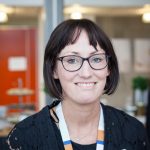
Name: Jenny Work: Project manager and communicator for Sustainability Forum at Lund University Studies: Film studies and Media and Communication studies, 2006
What are the most import factors for a sustainable work-life? To be aware of the challenges that come with digital stress and organisational changes. To be able to adjust to social change and always be eager to learn new things.
What is your takeaway from the event? The importance of discussing “digital temptations” in the workplace, for example, when you are available by email, phone, etc. for your employer. Another takeaway from today is that we handle challenges in the workplace differently depending who we are as individuals.
Name: Dan Work: Retiree, has previously worked as an engineer at Sydkraft and Logica Studies: Electrical engineering, class of 1978
What are the most import factors for a sustainable work-life? To have time to relax and have the opportunity to be unreachable from time to time. You have to have the ability to plan your work: before the weekend, write a to-do list for the coming week and before your vacation, write a to-do list for when you return. This way you don’t have to think about work during your free time. That’s a routine that worked very well for me.
What is your takeaway from the event? It has been very interesting to listen to so many different perspectives on this topic.
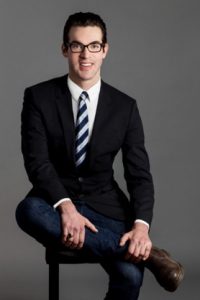
This week in the LU Alumni world series we meet Matthew Moore, LUSEM alumnus class of 2010 and 2011 who shares his time between the Canadian real estate market and volunteer projects in Sierra Leone.
You graduated with two Master’s degrees from Lund University, within Accounting and Corporate Finance, class of 2010 and 2011. Can you tell us more about with you’re working with today?
I am currently working as partner in several real estate businesses with my family in Atlantic Canada: Oceanstone Seaside Resort, Premiere Self Storage, Moore Executive Suites/ Student Living and two vacation villas in Barbados. My focus is on marketing, strategy and business development.
What does a regular day look like for you to today?
My mornings start with a 5-minute meditation and a Crossfit workout. Then I usually visit the office, work on business development, marketing or strategy tasks, and consult with contractors on development projects. I skype once or twice a day with managers at Cragmere Villas Barbados vacation rental properties regarding new reservations and operational issues. My schedule is pretty flexible which allows me to travel and work remotely which is great!
Has your Lund University education been beneficial in your work?
In addition to the theoretical tools which provided a much deeper understanding of business, my experience at Lund University shed light on unique ways to approach the traditional. As a result, the businesses I’m in tend to operate a little differently. We’ve changed up traditional business models by being innovative, improving customer experiences and benchmarking with best practices and with similar firms in different countries. “The future is here, it’s just not evenly distributed” is a good analogy. For example, one innovative idea I acquired from a Swedish real estate company while studying at Lund University was architectural layout drawings and virtual tours. We’ve added these tools to our real estate listings which have helped customers visualize the apartments they are looking to rent.
While living in Sparta residence at Lund University, I was also inspired by the innovative storage solutions for small living spaces. Once back in Canada, I began to buy and renovate student rental and executive suites with similar storage and design ideas such as floor to ceiling storage space, hygienic wet bathrooms and extra shelf space. The feedback from tenants has been received incredibly positive. Lund University has also provided me with wider, international network which has provided me support when I need business advice.
Lund University is like a second home to me, which is a very liberating and empowering feeling. As a result, my experience in Lund has motivated me to travel more and experience new cultures.
You recently returned from a trip to Freetown, Sierra Leone, where you have been volunteering at a school. Can you tell us more about your experiences from Sierra Leone?
I spent eight days with the executive director of Help2overcome.org Ben John helping to build a toilet facility at an all-girls primary and secondary school with over 700 students. It was an eye-opening experience. Upon arriving at the Freetown airport, I was a bit surprised that the electricity went completely off several times while we were waiting for our bags. Apparently, it’s pretty common- about 80-90% of the 2 million people in Freetown live without electricity.
In my first few days in Freetown, I learned more about the Sierra Leone’s tragic history. Just 10 years ago, the country was in civil war where tens of thousands then experienced the Ebola crisis where thousands of people lost their lives.
The living conditions in Freetown were extremely poor. During my visit, I saw people bathing in street gutters polluted with feces and many others living in garbage dumps infested with rodents. Sierra Leone is reported to have one of the highest rates of youth deaths (between the ages of 18-35) in the world as a result of malaria, insanitary living conditions and other diseases. Most people lived on less than $1 euro per day, and were deprived of many of things we take for granted in the developed world: running water, toilets and electricity.
Human rights were also very limited. School teachers whipped the children or forced them to kneel on cement if they misbehaved. At several of the schools, we noticed there were cistern systems which were supplied by non-for-profit organizations but they had all broke and the schools did not have any funds to repair.
Our project at FAWE primary secondary school consisted of building a toilet facility using sustainable toilets imported from the Swedish manufacturer EcoLoo. It was quite difficult to deal with suppliers and contractors since corruption was so widespread there, but we managed to complete the project on budget.
The children were so sweet, affectionate and grateful. It was heart-warming to make a difference in their lives. The kids also taught me the importance of resilience. Despite being malnourished, living amongst garbage and rats or having the constant reminder of human brutality as the result of an amputated limb, they were all smiles. Perfect examples of “Acceptance. Change. Precedes Survival.”
My experience in Sierra Leone also made me more grateful. I realize we tend to take a lot for granted; especially basic living necessities such as running water and toilets.
What made you decide to travel and work on a volunteer basis? Do you have plans for future volunteer projects?
I wanted to get a first-hand experience of poverty and learn about the challenges and the way of life of people in undeveloped countries. I also wanted to make a difference. It felt very heart-warming to make a difference in the quality of life of these children.
I plan to return to Freetown on May 21, 2019 for another 8 days to help build the next toilet facility with help2overcome.org at another all-girls school in Freetown.
What’s your best advice to someone wanting to make a difference by traveling abroad for a volunteer project?
Volunteer with a reputable organization which can help guide you through the steps required to prepare for travelling abroad. Connect with others who have previously worked for the volunteer organization and ask them for their advice. The organization help2overcome.org that I am involved with is looking for ambassadors and volunteers for future projects planned in Sierra Leone and Rwanda.
I would be happy to provide more information to anyone in the Lund University Community- feel free to connect with me on www.linkedin.com/in/matthewmoorecanada or email me at info@mooresuites.com– I’d be more then happy to answer any questions.
What will the cities of the future look like? How do our personal choices affect the climate? How do we steer a path towards a sustainable future? The climate and the prerequisites for a sustainable world for future generations are highly topical issues. At Lund University, we conduct world-leading research that tackles some of the biggest societal challenges of our time.
This week the Sustainability Week, Hållbarhetsveckan, runs from 8 April to 13 April. The week is a yearly event in collaboration between the University, the city and other organisations. Every Sustainability Week has its own theme and this year the organisers have chosen to focus on the underlying ambitions of Agenda 2030 with the theme Transforming our World.
Sharing cities Monday morning and the Sustainability Week kicks off with a seminar on Sharing cities: Business Models and Behavioural Economics, a seminar hosted by the International Institute for Industrial (IIIEE) and Urban Arena at Lund University. Lund University is part of the collaboration Sharing Cities Sweden, a program that aims to put Sweden on the map as a country that actively works with the sharing economy in cities. The objectives of the programme are to develop world-leading test-beds for the sharing economy in Stockholm, Gothenburg, Malmö and Umeå.
Learn more about the Sustainability Week 2019 Take the opportunity to learn more about what society and you can do for a sustainable world at the events during the Sustainability Week 2019, 8-13 April. Hållbarhetsveckan 2019: Transforming our world
Work at the Agenda 2030 Graduate School at Lund University Do you want to contribute to reaching the global goals for sustainable development? Apply for the new Agenda 2030 Graduate School positions at Lund University today! Read more here.
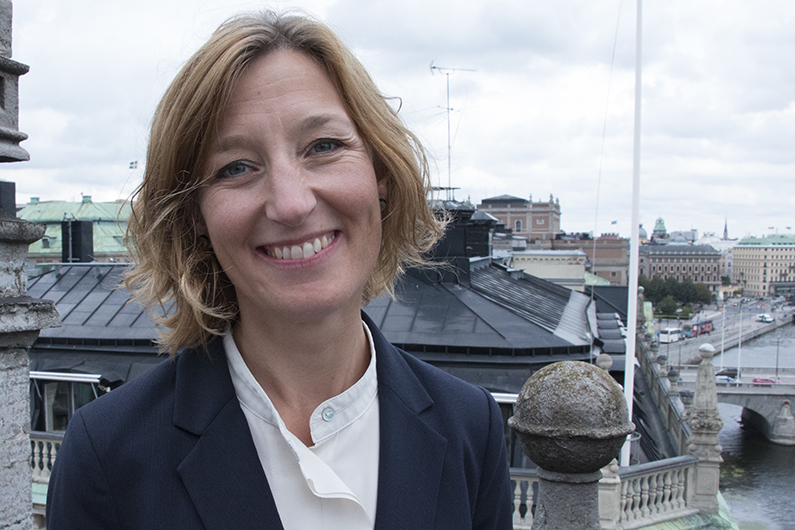
Alumna Eva Schultz
Photographer: Pierre Henhammar, Government Offices
This week we meet Eva Schultz, alumna from the Masters of Laws programme, class of 2004. Eva works as a Legal Counsellor at the Swedish Permanent Representation to the EU.
Alumna Eva Schultz Photographer: Pierre Henhammar, Government Offices
Q: You have a Masters of Law degree from 2004. What have you been doing after your graduation? I have been working mainly in Brussels, in various positions, but also at the Swedish Government offices in Stockholm. Currently, I am a Legal Counsellor at the Swedish Permanent Representation to the EU posted from the Ministry of Justice and covering migration issues.
Q: Has your education from Lund University been beneficial in your work? In what ways? My law degree has proven quite beneficial, to begin with as a kind of quality label that opened many career doors for me during my first years in Brussels and, furthermore, the methodology and knowledge acquired during my law studies have been useful in my work as a policy officer in several fields.
Q: Were you active in the student life in Lund? If yes, in what ways? Yes, I was very active in the student life in Lund, both at the Law Faculty where I held positions on the boards of ELSA and the Law students’ association and at Kalmar nation as Pro-Qurator.
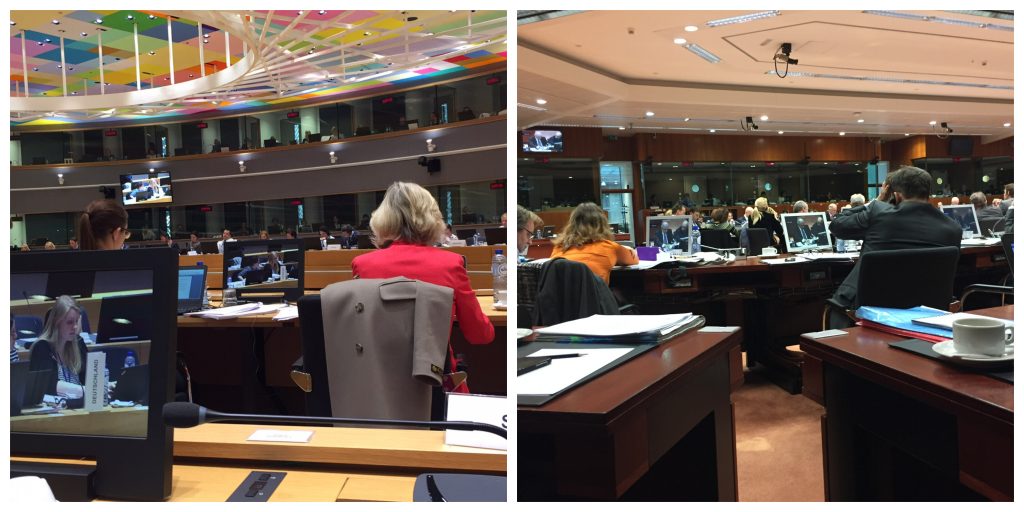
Q: Currently, you work as a Legal Counsellor at the Permanent Representation of Sweden to the EU in Brussels. How does a typical work day look like for you? I spend a typical day in the Council negotiating legislative proposals in the area of migration. The Permanent Representation is like an extension of the Government Offices and my role is to bring forward the Swedish position in negotiations. I always work on instruction from the capital.
“This is definitely my most common view at work, maybe not exciting at first glance, but behind the screens there are people and they represent not only their governments’ positions, but also an enormous amount of knowledge, generosity, humour and collegiality”
Q: When studying at Lund University, you did an exchange year at the Jean Moulin University Lyon 3 in Lyon, France. What were your biggest takeaways from your exchange in Lyon? My year as an Erasmus student in Lyon was fantastic in every possible way. Most importantly, that year really convinced me of my wish to work abroad, in a French speaking environment and with EU related processes.
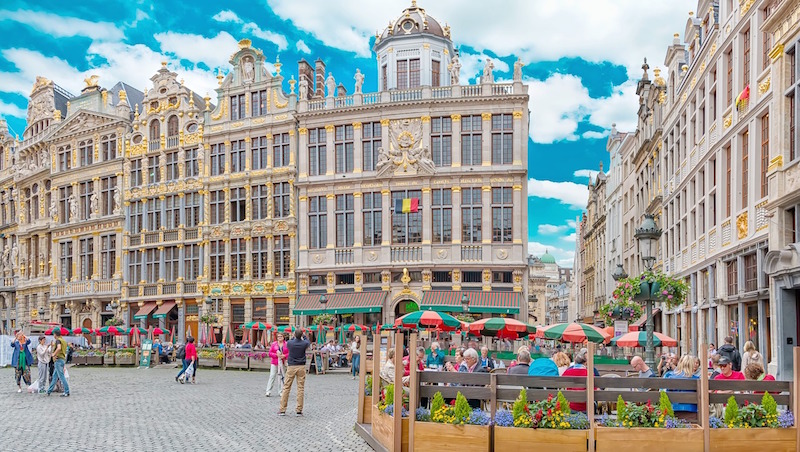
Q: Currently, you reside in Brussels, Belgium. How does everyday life differ between Belgium and Sweden? Life in Belgium is less organised than Sweden, in many ways more complicated due to everything from complex administration to garbage in the streets, but also much easier when it comes to getting to know new people, having an interesting and diverse job environment, as well as friends from around the globe. This is true for Brussels, rather than Belgium in general, but I unfortunately still know quite poorly and I think that goes for my expats in Brussels.
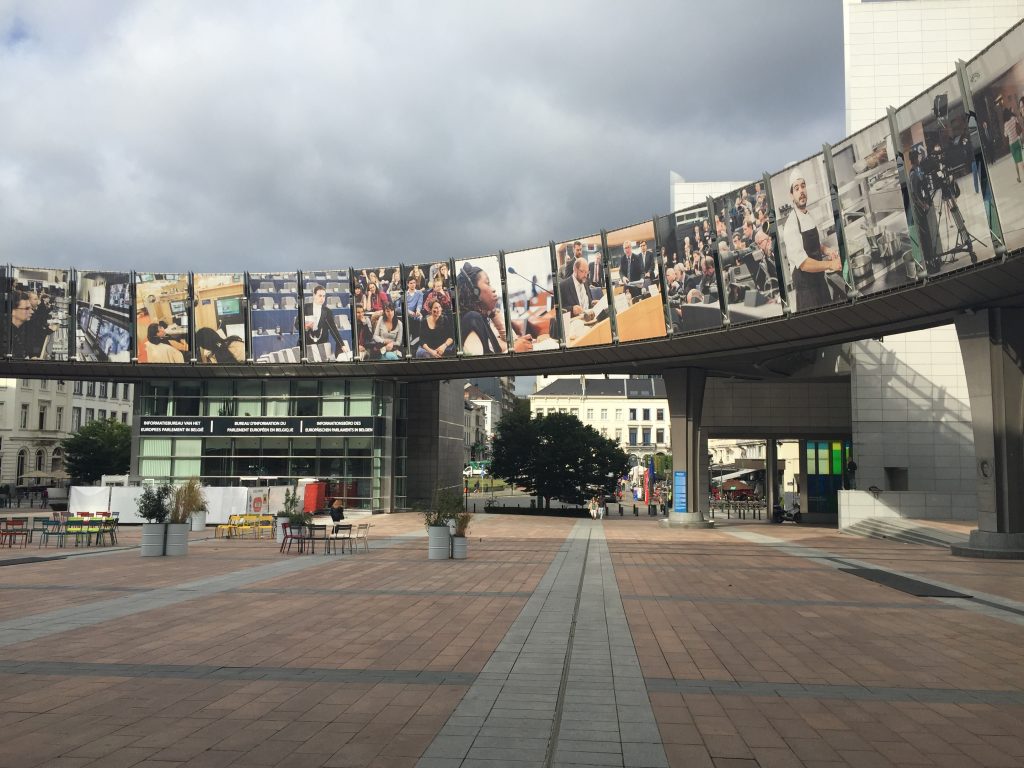
Agora Simone Veil outside of the European Parliament “Great to think about the influencial woman who gave name to this beautiful square in front of the European Parliament – Agora Simone Veil”
Q: What do you enjoy doing when you are not working? Seeing friends, spending time with family, travelling, be spontaneous, all the things that are so easy in Brussels and that I sometimes have the impression are quite hard in Sweden – at least when it comes to spontaneity. 🙂
Q: If you could only bring three things with you to a deserted island, what would you bring, and why? Do my children count as two things? They would be the first two things. Then again, I would not want them to have to be in a deserted island. I actually find it really hard to think of things that I would like to bring anywhere, I’d always think of persons first. If you’d twist my arm, it would be bubbly, cheese and chocolate that I would bring, so I would not survive very long, as you can tell. 🙂
Lund University and the network of Universities in South Sweden – Lärosäten Syd – are pleased to invite all alumni based in Brussels to join us for an Alumni Reception on 21 May. This will be a fantastic opportunity to network with other alumni from the six universities that make up Lärosäten Syd: Lund University, Malmö University, the Swedish University of Agricultural Sciences, Blekinge Institute of Technology, Halmstad University and Kristianstad University.
About Lärosäten Syd Lärosäten Syd has a joint office in Brussels since August 2018, which has the objective to increase the profile of the universities at EU level, to improve the monitoring and influencing of EU policy and programmes and to build closer international partnerships. At the reception you will hear more about this unique university collaboration. Learn more about Lärosäten Syd here
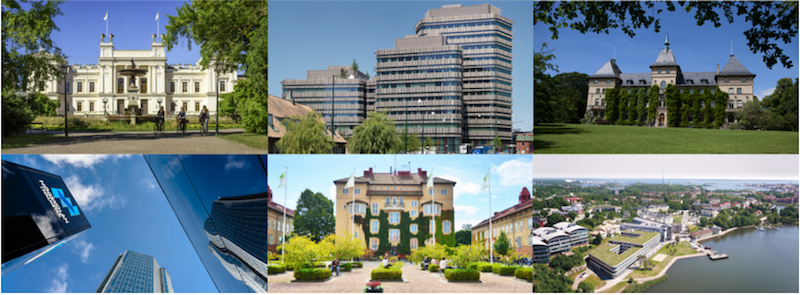
The six member universities in Lärosäten Syd
Save the date for this event! The official invitation with programme details will be sent after the Easter holidays, however, the registration page is already open. A save-the-date email has been sent to all Brussels based alumni.
Interested, but haven’t received the registration link? Send an email to us on info@alumni.se.
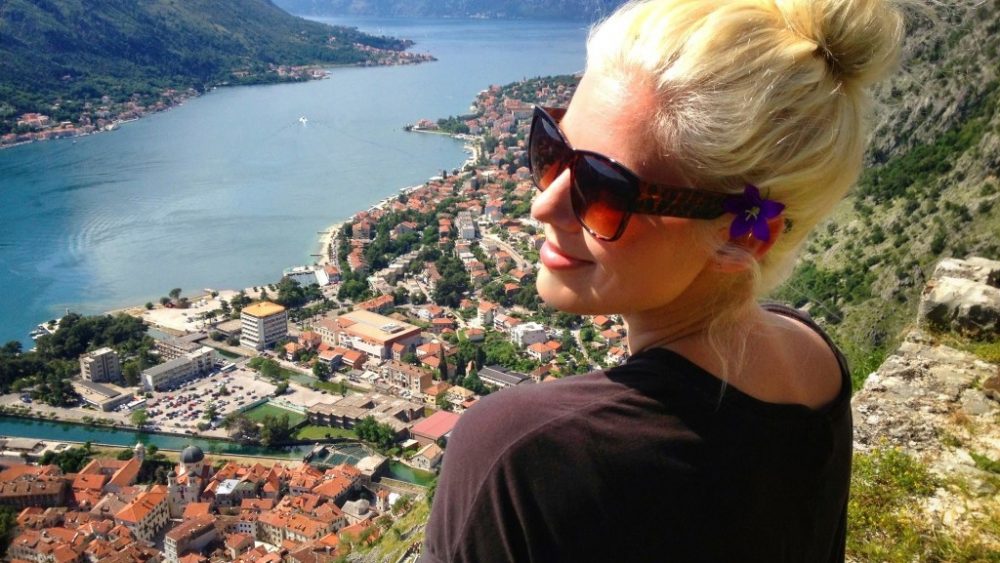
Hello Larissa Olenicoff a.k.a The Blonde Gypsy, awarded travel blogger from the United States and LU alumna.
Can you describe yourself in three words?
Curious. Honest. Wild.
You received your master’s degree in European Studies in 2013, what have you been up to since you graduated from Lund University?
A lot. For the first couple of years, I was traveling back and forth between Europe and the United States, working with travel brands and tourism boards for my blog. After a while, I wanted to explore more places that were lesser traveled and where tourism boards were almost impossible to work with, so that’s when I started getting involved with tourism development projects funded by organizations like USAID, UNDP or the EU.
The biggest one I was lucky to be a part of was Via Dinarica, which extends from Slovenia to Albania and serves to connect the cities and rural communities in and around the Dinaric Alps. During the time spent promoting that project is when I started falling in love with the Balkan region. By 2015, I decided that in order for me to continue my passion of working with tourism in that part of the world, I had to move there. So I did.
For two years, I lived in Prishtina, Kosovo working on whatever kind of tourism-related opportunities I could get in all the neighboring countries, while maintaining a full-time position at a private university as the coordinator of its tourism center, which I helped establish.
At the end of 2017, I made the decision to move back to California, where I have lived since, and just launched a company specializing in Balkan travel from tours to trip consulting. While my base is in North America now, I am trying to spend at least 2-3 months a year in the Balkans and exploring other new, lesser-traveled destinations.
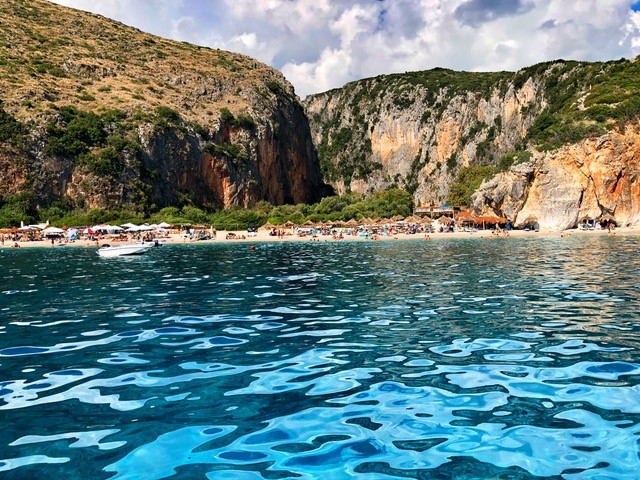
Borsh, Albania
Has your Lund University education been beneficial in your work?
Absolutely. For starters, I can officially call myself a “Master of Europe” since I received a Master of Arts in European Studies, which has helped build more credibility for my blog and brand, considering its primary focus has been European travel.
I actually could not have picked a better program or coordinators (shout out to Anamaria Dutceac Segesten and Mattias Novak) to prep me for the work I would eventually do in the tourism development sphere. Among other things, it has been very helpful when I for instance write about destinations and add the many layers of a location, such as identity and history.
Did you travel a lot as a child with your family?
I’m super lucky to have grown up taking family trips a few times a year, even if they weren’t far or exotic (like Las Vegas), the point was just to get out of the house and go on an adventure.
Trebinje, Bosnia & Herzegovina
When did you discover that you had the travel bug and what initiated it?
When I was 15, we took a big trip to Europe, from Spain to the south of France, and that is when my fascination with the continent really began. My main goal in life was to live there, anywhere. Suffice to say, I have achieved that a handful of times by now.
What place would you not travel to again?
I would give any place a second or third chance even if I didn’t have a good experience the first time…but I would definitely be okay never going to Paris again (I can say that with confidence after six visits).
Which is your absolute top destination?
For the moment, Albania
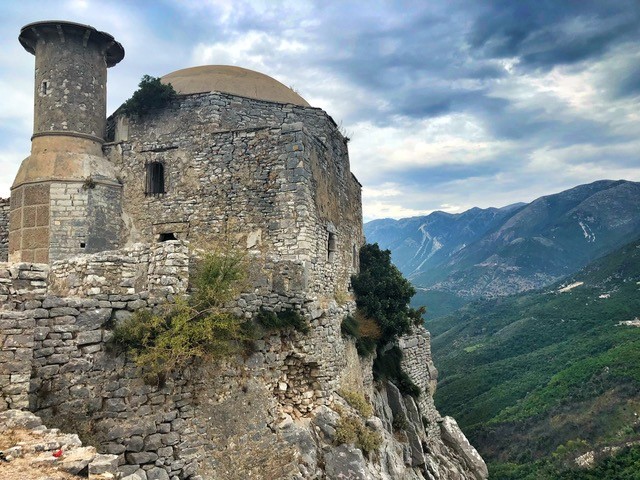
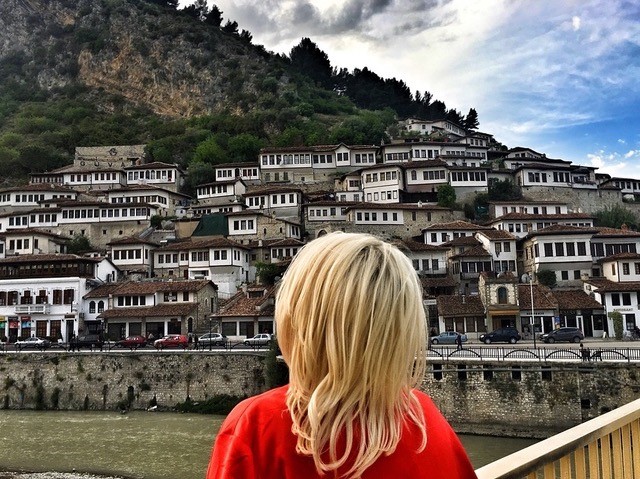
Berat, Albania
You say that you do not only want to travel to countries, but to connect with them. What is one of the most memorable connections you have made abroad?
The ones I still have. From really great friends I made to local boat captains and bar owners, I’m lucky to have small and large networks in a lot of different countries that I can still reach out to any time I want to ask about anything from current political situations to how the weather is.
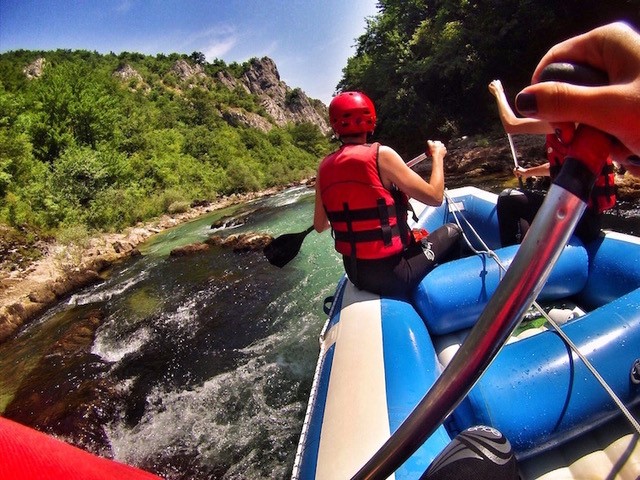
Rafting on the Neretva in Bosnia & Herzegovina
When you travel, do you always try all the local food no matter what it is?
Mostly yes, but I’m not into extreme organs. Heart, lungs, brain, etc…I would not willingly eat those, though it is very possible I unwillingly have done so due to language barriers.
You traveled around for 10 years living out of a suitcase, now you live back in California, what made you slow down?
Constantly traveling and moving around wears you down and I just finally got to a point where the last thing I wanted to think about was starting over again somewhere or even planning travels longer than a carry-on bag would last, which for me is like 3-4 weeks. I also wanted to be closer to my family.
Where are you heading next?
Back to the Balkans! I will be offering tours through North Macedonia (newly re-named) and Albania this year. I would love to get some fellow Lunders on it, so will be offering anyone who is a current/former student or faculty at Lund University 15% offany of my upcoming tours – just mention this interview.
Lundagård is not only the name of the large park surrounding the University main building and the AF-building. It is also the name of a student magazine written by and for Lund University students since the 1920’s.
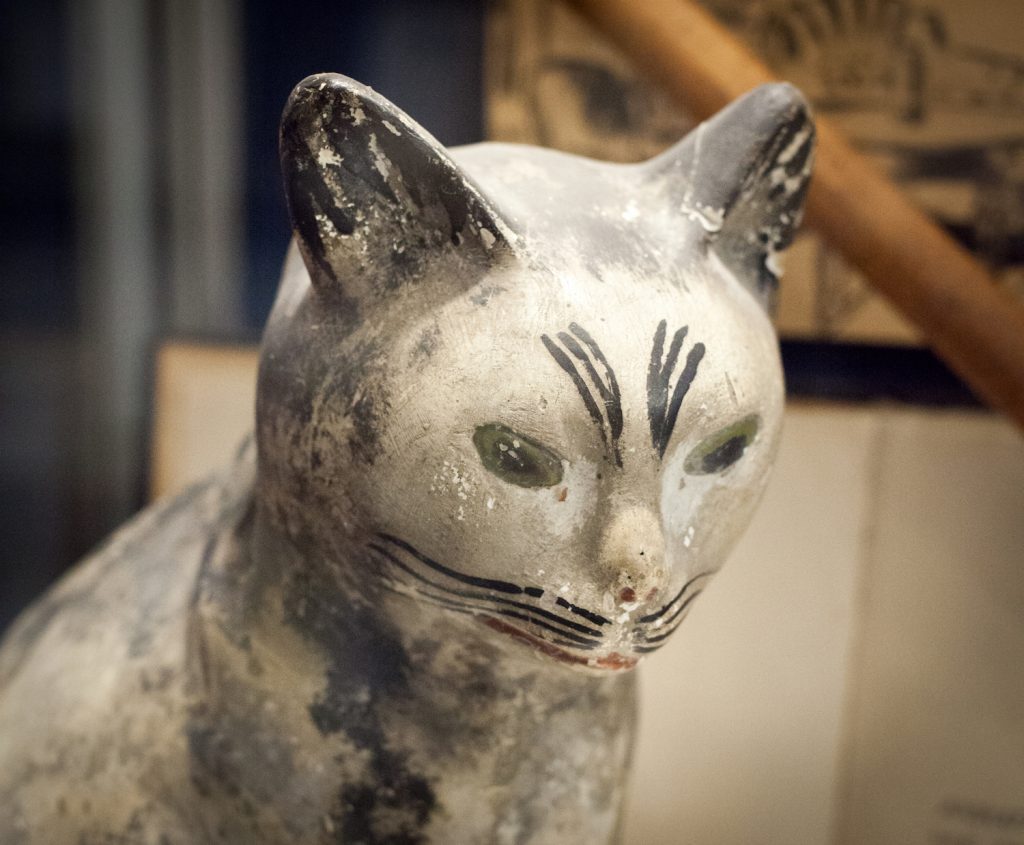
The first edition, a 12-page-long magazine created by editor Gunnar Aspelin, saw daylight on 26 March 1920. A few years later, in 1924, the editoral staff was joined by their mascot, “Quatten”, a white plaster cat. A cat was considered a good representative for the new magazine: a cat is independent, has sharp claws and is not afraid to bite its master’s hand.
The white cat had been around a few years before it moved into the Lundagård editorial office. During the Lundakarneval parade in 1920, one of the parade floats was filled with white plaster cats. After the carnival, the cats went searching for a new home and moved in with Lundagård magazine four years later.
One of the original white cats from the 1920’s.
Throughout Lundagård history, alumni editors have received a white plaster cat when they leave their position.
A white dog from the Lundagård Jubilee.
On a side note, during the magazine’s 70th Jubilee in 1990, the cat was temporarily accompanied by five plaster dogs, which served as jubilee presents to previous editors and devoted fans.
This week we meet alumnus Kent Buchanan, who studied Environmental Studies and Sustainability Science (class of 2011) and has many fond memories of the time he spent with his classmates. Now, he lives in South Africa and works on climate change mitigation policy and research.
Q: You have a Master’s degree in Environmental Studies and Sustainability Science from 2011. What have you been up to since your graduation?
After finishing in Lund I decided to settle in South Africa, my place of birth. I had a brief exploration of jobs in the USA (where my family had emigrated to) and Tanzania right after leaving Lund in 2011, but I was ultimately drawn to Johannesburg – which is a wonderfully energetic and boiling pot of cultures, arts and ideas. For me, the attraction to Johannesburg was both professional and personal.
Professionally, I found an opportunity to work in corporate environmental sustainability as a consultant, and later I shifted to the national government to work on climate change mitigation policy and research in 2014 in the Department of Environmental Affairs.
Personally, I find fulfilment in being a part of the future of this relatively new country that has many many societal challenges. The general attitude of people I surround myself with are passionate about change and fixing the problems to improve the community around us. Of course, I am happy to be in a place with a wealth of natural beauty and such friendly and warm people!
Q: What does a typical day at the office look like for you?
If I could choose a word to describe a typical day working at the environmental ministry it would be: unpredictable. Though my current work focus is on analysis and research on climate change mitigation opportunities through to 2050 and allocating carbon budgets with companies, I might be called in by my manager to prepare an urgent briefing for senior officials or the minister’s office. Or, I might be requested on the day to represent our team at a stakeholder engagement for a new climate change regulation and so on. As I am writing this it is a Sunday and I am leaving a science festival in the Eastern Cape where I had provided climate change and energy workshops with high schools to catch a flight tomorrow to Bonn, Germany to attend a meeting for Lead Reviewers of National Greenhouse Gas Inventories of Annex I countries at the UNFCCC. It is a busy and dynamic job, to say the least.
Kent and his colleagues taking a break at the office.
Q: What is it like working with climate change issues in South Africa? Are there unique challenges that you have not experienced in other countries?
I think it is quite an exciting time to work on climate change issues in the world. Due to the complexity of the issue, a lot of the research and work I do is unique. We, as a world, are not acting fast enough and this can be really frustrating, but I try to keep focused on all the positive steps we make going forward. Fortunately, in South Africa, climate change is not challenged significantly by ‘climate skeptics’ and it is not a political issue. Most everyone in the country agrees we need to act, but the disagreements come on how we should act on climate change.
What makes working in the government of South Africa very interesting is that our government has a clear mandate to improve the social and economic situation while ensuring the future of the environment. Specifically, the team I work in has to contribute to improving the economy, increasing jobs and reducing the gap between rich and poor while reducing greenhouse gas emissions. By the way, the right for a person to have a healthy environment is part of the Constitution here. The work that goes into developing our climate change effort within our specific team is just as much research on economic and employment impacts of climate action as actual greenhouse gas reductions.
Q: Has your Lund University education been beneficial in your work? In what ways?
I really appreciated the approach to teaching at Lund University, which promoted critical thinking and creativity within an academic setting. There was time and space provided throughout my course that allowed us as a class to discuss and really think about the environment, economy and society. This really got us thinking out of the box. I remember some of the crazy ideas we would come up with, like challenging the idea of having an economic system without ‘currency’ (proposed by my Ugandan friend) or ways to rebel against the consumption ways of society like disrupting city parking by having a few of us set up chairs in a parking bay without a car while still paying the parking meter (proposed by a Swedish friend).
Since it is such a complex issue that is cutting across all sectors, we really have to be able to critically think outside the box to be able to come up with impactful government solutions to mitigate greenhouse gases. I think the style of teaching at Lund University really prepared me for this.
A class gathering in Lund at one of our many dinners together.
Q: What is one of your favourite memories from your student days in Lund?
From waiting in the queue at Systembologet on a Friday to our relaxed dinners together with classmates, there are many fond memories. When I think of my time in Lund I still hear the train passing by to a standstill at Lund station, the suitcase wheels and bicycles steadily passing over the cobblestone, the heavy bass sound layered with laughter and screaming coming from the Nations. I could really get carried away with my fond memories.
As for a favourite memory, it would be hanging out with my friends in Stadsparken playing on a slackline and chatting about life.
This week we meet Huijin Ying, alumna from the Master of Psychology programme (class of 2016). Huijin has studied in China, the USA and Sweden, and currently resides and works in Lyon, France as an HR Project Manager at Groupe SEB.
Q: You have a Master’s of Science degree in Psychology from 2016. What have you been up to since your graduation?
During the last semester of my studies I visited my boyfriend at the time in France over the Christmas holidays. At that time I was searching for different internship positions and found a special internship in Lyon, France at Groupe SEB. They offered an internship position where one could work six months in France, and six months abroad. This was very appealing to me as I wanted to try out new things and explore my options. Hence, I applied, and went on the first interview, which went well. I had to return to Sweden after the Christmas holiday and began writing my master thesis, when I received an email from Groupe SEB who wanted a second interview with me. I told them about my situation, that I was studying in Sweden and that I was actually just on a visit in France. They told me that they would pay for my accommodation and flight, just as long as I flew to them for a second interview. How could I resist that? I couldn’t, and flew in to Lyon, or to be more precise, Ecully, for the second interview, and shortly after that they gave me the internship position. Right after I handed in my master thesis I flew to France and began my internship. After a while I became employed at Groupe SEB and today I work as an HR Project Manager there.
First potluck dinner together with my psychology class!
Q: You currently work as a HR Project Manager at Groupe SEB, focusing on the region EMEA (Europe, Middle East and Africa) in Lyon. How does a typical day at work look like for you?
Difficult to answer – there is no typical day! However, there are some common denominators which I work with. I work towards 15 countries: Turkey, Russia, Ukraine, India, Egypt, Central Europe (e.g. the Czech Republic, Poland and Hungary), Europe South Eastern Europe (e.g. Romania and Bulgaria) and the region of the Middle East. On a weekly basis I am in contact with all HR managers working at Groupe SEB in or for these countries/regions. There are nine HR managers which I communicate with, and some of them are responsible for several countries. For instance, the HR manager in the Czech Republic, is responsible for Hungary as well. I function as bridge between the local HR manager and the vice President of the EMEA region.
My role includes making sure all HR managers are working strategically and learning from their job. For instance, we arrange what we call “Learning Expedition”. This means that we sometimes, depending on the resources, send people from one country to another to learn from each other for a few days, exchange ideas and communicate what is needed for Groupe SEB to become better. As I mentioned, on a weekly basis I have contact with all nine HR managers, this is always a part of my schedule. Other than that, I have no “typical” day. New topics and projects arise all the time, seeing as the HR project manager role that I have is very versatile and I often have to learn new things, myself.
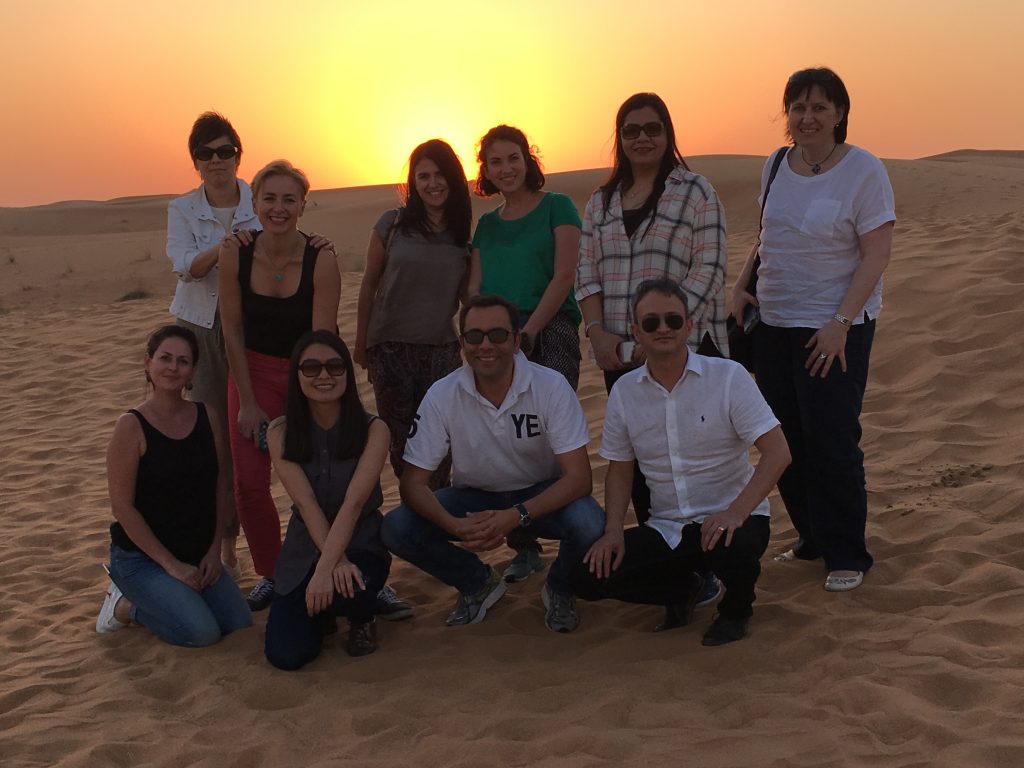
A picture from after I had done Dune Bashing in Dubai with my colleagues
Q: In what ways do you think your education from Lund University benefits you in your work?
I studied my Bachelor’s degree in the USA and when I came to Sweden I noticed how different the education system was. In the United States, I was used to the professors always providing us with a lot of information and leaving the classroom with all the essential information. However, when I came to Sweden, I remember leaving the classroom thinking: “That’s it?” However, I did not and still do not perceive that as a bad thing. This enabled me to strive to learn more myself, to read more; I don’t think I have ever read as much in my entire life as I did during my two-year Master in Lund! This has benefitted me in my work, as I always have to learn new things and try to understand everything, which I also had to do during my studies.
Q: What is your favourite memory (or one of your favourites) from your student days in Lund?
One of my fondest and strongest memories from Lund University was actually one of my psychology professors, Eva Hoff. She was incredibly supportive regarding my master thesis and helped me in many ways. For instance, she taught me how to think in an analytical way, while at the same time not being limited by the literature and studies that have already been conducted on the subject. She, among other professors, taught me to think creatively and to view things in a more complete, holistic, way. This has helped me in my current work and something I am very grateful for, which is the reason it is one of my favourite memories from Lund.
Group photo taken in the beautiful Swedish island, Ven
Q: Where do you see yourself in ten years’ time?
Hard to say! I have always had many different ideas, and my life routes always changes, making it hard to answer this question if it were one year, let alone ten years! However, in my future I see myself working for myself, rather than working for someone else. There is more risk in this, however there is more excitement, which intrigues me. Perhaps I will be doing this in ten years. I think it was Tony Robbins, American author and entrepreneur, who once said something along these lines: “if you think of something hard enough, eventually it will happen”, which I believe is true. I will also strive to balance everything in my life better, so I have more time to do more hobbies of mine that I enjoy doing.
Q: You have been working in China, Japan, France, Sweden and the United States. What is your advice for alumni interested in an international career?
Speaking from experience, I know how shocked one can be when moving to a different country. I remember how shocked I was when I first moved to France. However, it is important, even though you are shocked, and that is okay, to pretend like you are not shocked. Do things the way the people in the country you work in do them. Do not judge people based on what they are doing, rather, try to learn why they are doing things differently from you, adapt and learn from your differences to create something fantastic.
Do not take things personally! Sometimes, people will not answer your emails or your calls. Do not take this personally! It has nothing to do with you as a person, but rather, your professional role, or that they are unavailable for one reason or the other.
This is similar to the first point, but try to understand other people, instead of judging them. Everyone is different and different cultures work in different ways. This I have learnt from my different work experiences. This is something I think is incredibly important, together with that you should respect other people’s culture and norms if you wish to work in an international environment.
Bojana Atanasova, alumna from the Master of Public Health programme
This week we meet Bojana Atanasova, alumna from the Master programme in Public Health (class of 2017). Today, Bojana lives in North Macedonia and works at the Ministry of Health in Skopje.
This week’s LU alumni around the world, Bojana Atanasova
Q: You received the Lund University Global Scholarship award in 2015. What did this award mean to you?
Lund University is in my heart and I have only beautiful memories from the time that I spent there while studying. When I received the Lund University Global Scholarship Award, I couldn’t believe that my dream came true. I got an opportunity to study at one of the most prestigious universities in the world. This Scholarship was my only way to study in Sweden and I promised myself that I would engage hard in meeting the Lund University standards. This award was a window of opportunity for me and I am very grateful for receiving it.
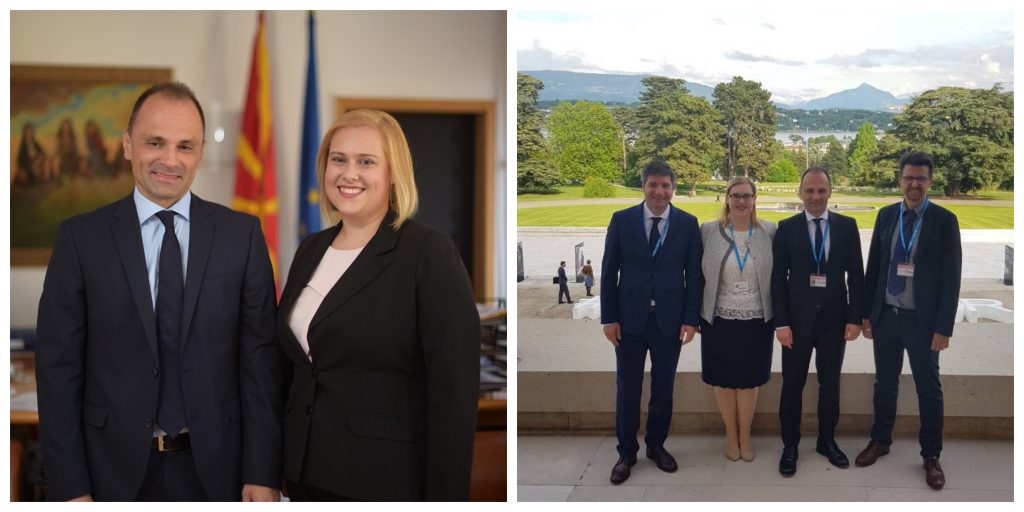
Picture to the left: Bojana at her workplace together with Dr. Venko Filipce Picture to the right: The North Macedonian Delegation at the World Health Assembly 71 in the Palais des Nations, UN, Geneva
Q: You work at the Ministry of Health in Skopje. How does a typical day at work look like for you?
Six months after graduation, I got a big opportunity and started to work as an advisor for public health to the Minister of Health. Six months later, I got promoted and I became Chief of Staff. This position is a great chance, but it is also a huge responsibility. I am learning every day. As a Chief of Staff, there is not a single day that is the same as the previous one. Every day is busy, starting early in the morning, and ending 12 or more hours later on some days. It is definitely not a 9 to 5 job. I am taking care of the schedule and meetings of the Minister of Health, taking notes, planning travels, preparing for Government meetings. I am receiving a lot of phone calls every day, providing advices, managing the Cabinet, doing my best to make things happen, participating in a lot of meetings, and finally, together with the Minister of Health, creating public health policies.
Q: Has your Lund University education been beneficial in your work? In what ways?
Master public health (MPH) programme prepares you for your future job in many ways. It has been very beneficial in terms of understanding how the system works, how to implement better policies, and how to communicate with the public in terms of health promotion and health communication. Additionally, it helped me to read and understand papers, to conduct research and based on that, to create policies. With all the knowledge and experience gained at Lund University, I am confident in my everyday job. By working for the Government now, I have a chance to create better public health policies and, in that way, to provide better healthcare for the patients, something that was my wish even before enrolling to the MPH programme.
Q: What is one of your favourite memories from your student days at Lund University?
I have many beautiful memories from my student days and it is really hard to find just one. I remember all the parties, “fikas”, and hang-outs, especially the days around Christmas with “glögg” and “pepparkakor”. However, one of my favourite memories is our group visit to Copenhagen, at UN city and European Environmental Agency. We had very productive lectures there, learned how the EEA, the UNFPA, and the WHO work and made great connections.
Picture to the left: Group visit to the UN city in Copenhagen Picture to the right: Picture from the last day of the MPH programme
Q: If you could plan an ultimate vacation, where would you go?
I love to travel and this is a very hard question because I have many travel plans on my bucket list. 🙂 However, if I can plan an ultimate vacation, it would be a trip around the USA. I want to visit many places, starting from New York City and all its’ landmarks, to Washington DC and the White House, Niagara Falls, Grand Canyon, Las Vegas, Los Angeles, and definitely my favourite destinations, Miami and Hawaii.
Q: What are your top three career tips for current students, especially international master students, at Lund University?
First of all, dream big. The future belongs to those who believe in their dreams. It is very important to set a goal and go for it. You have to be very persistent and never give up. But once you know what you want, the whole university is a great resource, which can present many opportunities.
Second, do your best and find an internship. You will be surprised by how much you can learn from it. You will meet a lot of people, even maybe your future bosses. Every recommendation is beneficial, and your previous experience will help you in your future job. You will feel more confident after doing an internship.
Finally, I know that you can very easily fall in love with Sweden and you will want to find a job and stay there. If that is your dream after graduation, start learning Swedish from the beginning of your studies, stay connected with all your classmates and teachers and apply, apply, and apply for different jobs, and again never give up. Just don’t get disappointed if you cannot find a job after graduation. There is always a chance around the corner, so don’t lose hope and trust in yourself. And finally, choose a job you love, and you will never have to work a day in your life.

 This week in the “LU Alumni around the world series” we meet Linda Karlsson, alumna from Equality and Diversity Management programme, class of 2014. After graduation, Linda moved down under, to Australia, to start a career with the goal to improve gender equality in the workplace.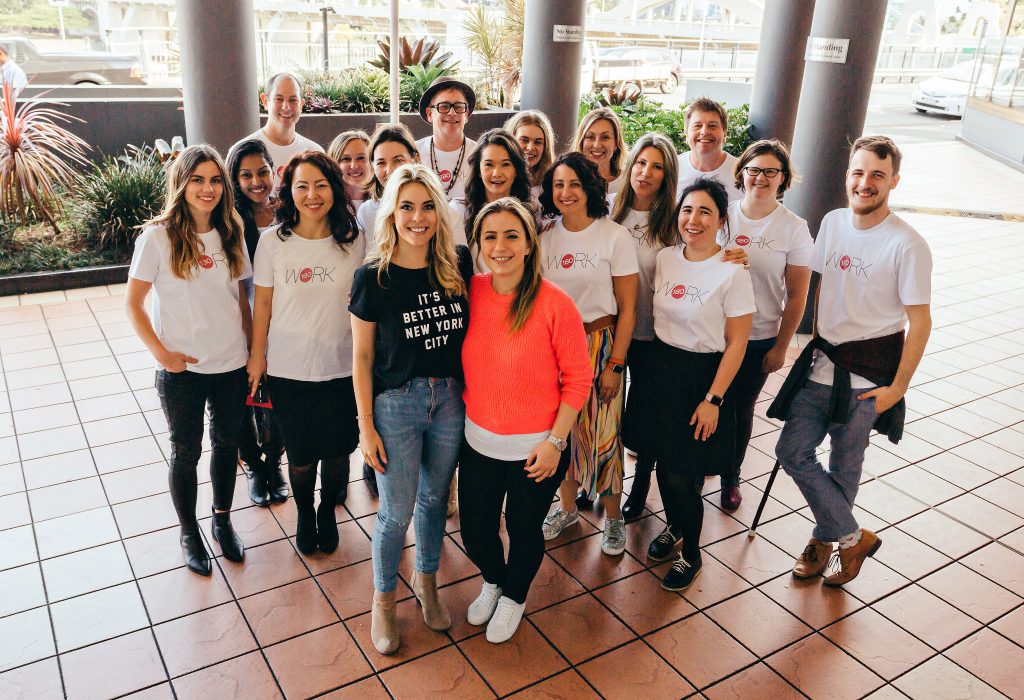

 Name: Philip
 Name: Jenny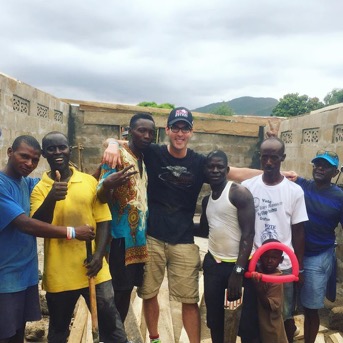
 I spent eight days with the executive director of
  I wanted to get a first-hand experience of poverty and learn about the challenges and the way of life of people in undeveloped countries. I also wanted to make a difference. It felt very heart-warming to make a difference in the quality of life of these children.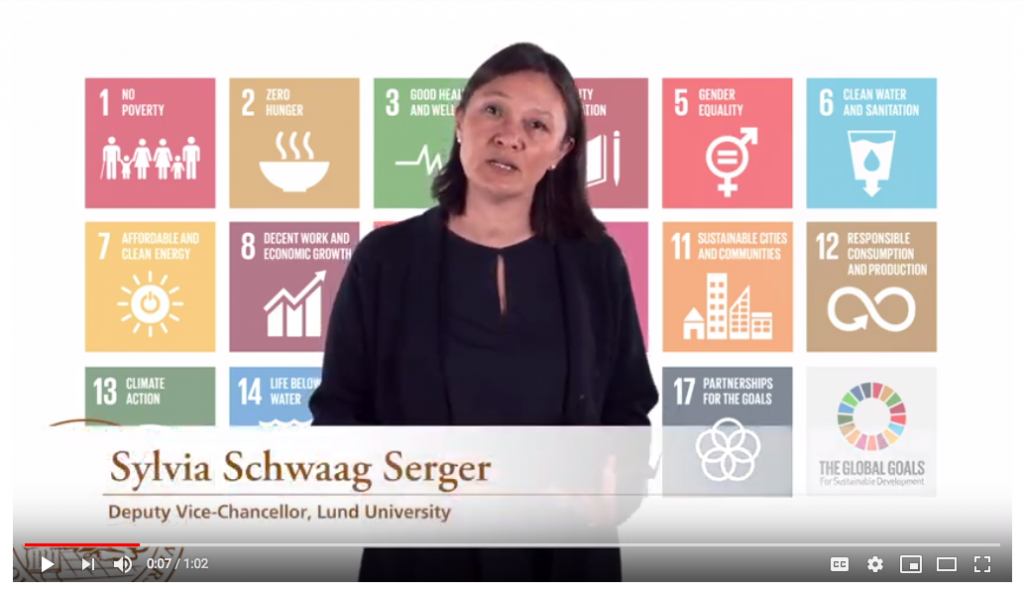





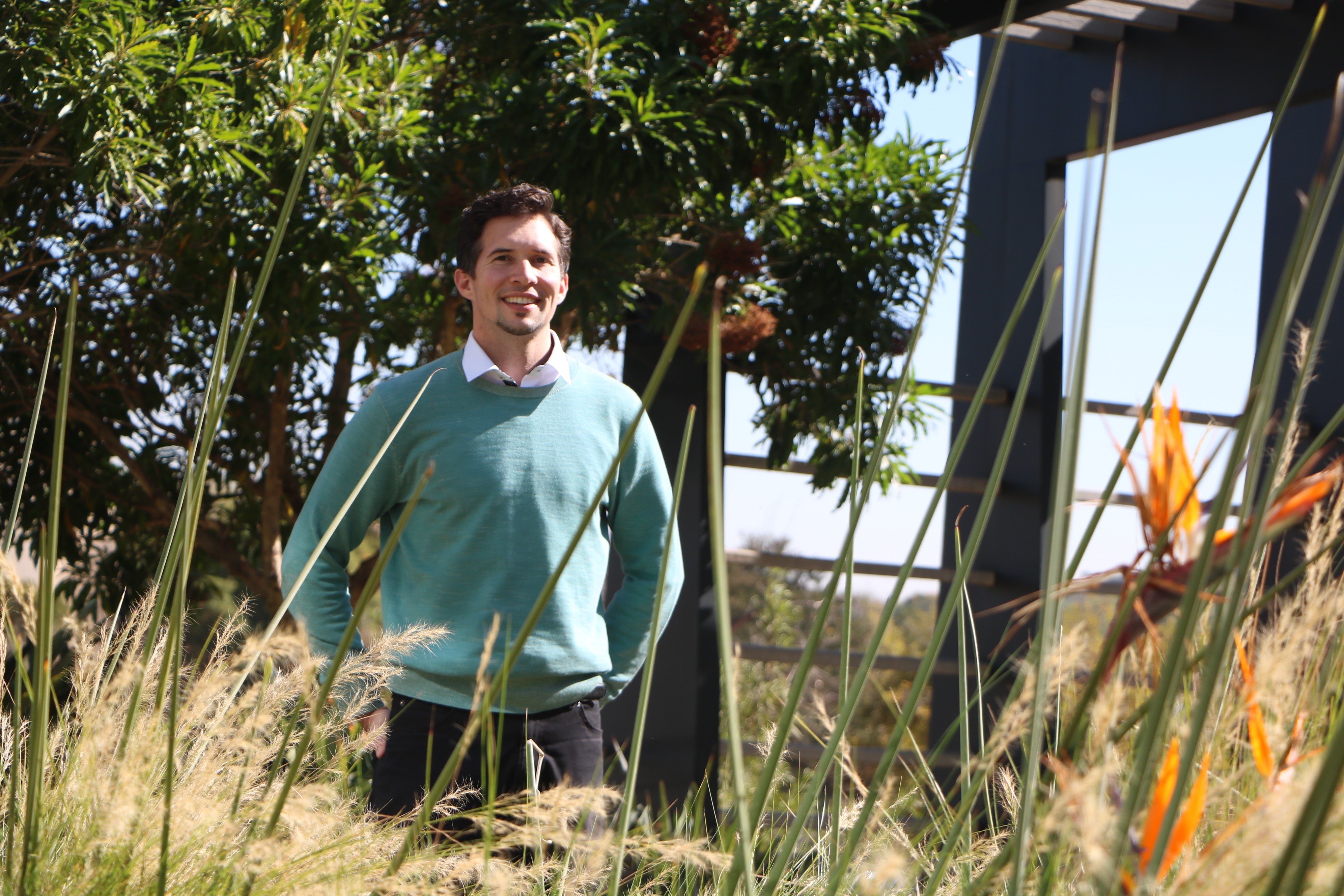
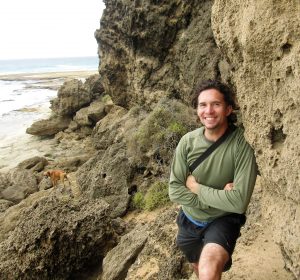
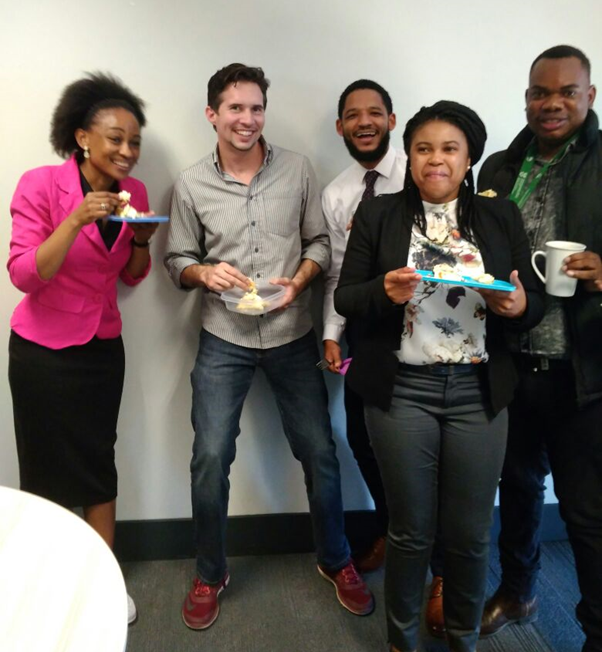
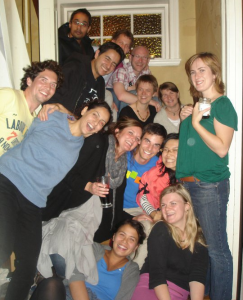
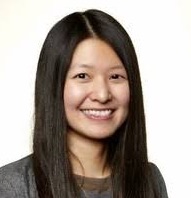
 This week we meet Huijin Ying, alumna from the Master of Psychology programme (class of 2016). Huijin has studied in China, the USA and Sweden, and currently resides and works in Lyon, France as an HR Project Manager at Groupe SEB.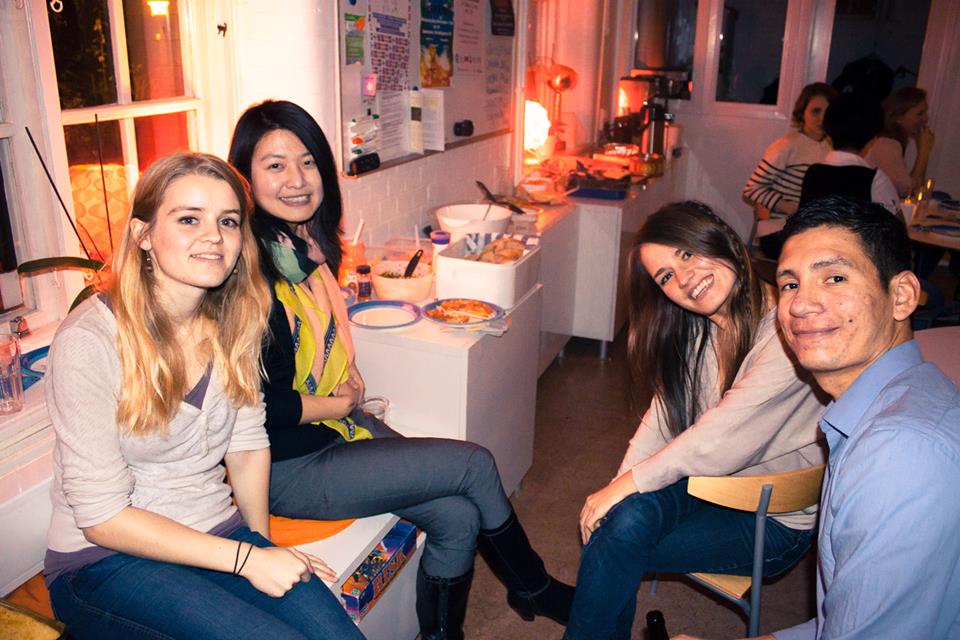
Comments