
Lund University alumna Hilda Christensson is inviting participants to join her most ambitious expedition yet – sailing the Northwest Passage in 2027.
Together with her partner, she runs Quest Ocean Expeditions aboard the expedition yacht Quest, and in 2027 they are planning one of their most ambitious expeditions to date: sailing the Northwest Passage through the Arctic, departing from Greenland and arriving in Alaska. The voyage is scheduled for late July–August 2027 and is expected to take approximately 45 days. The expedition is now looking for additional participants to join the journey.
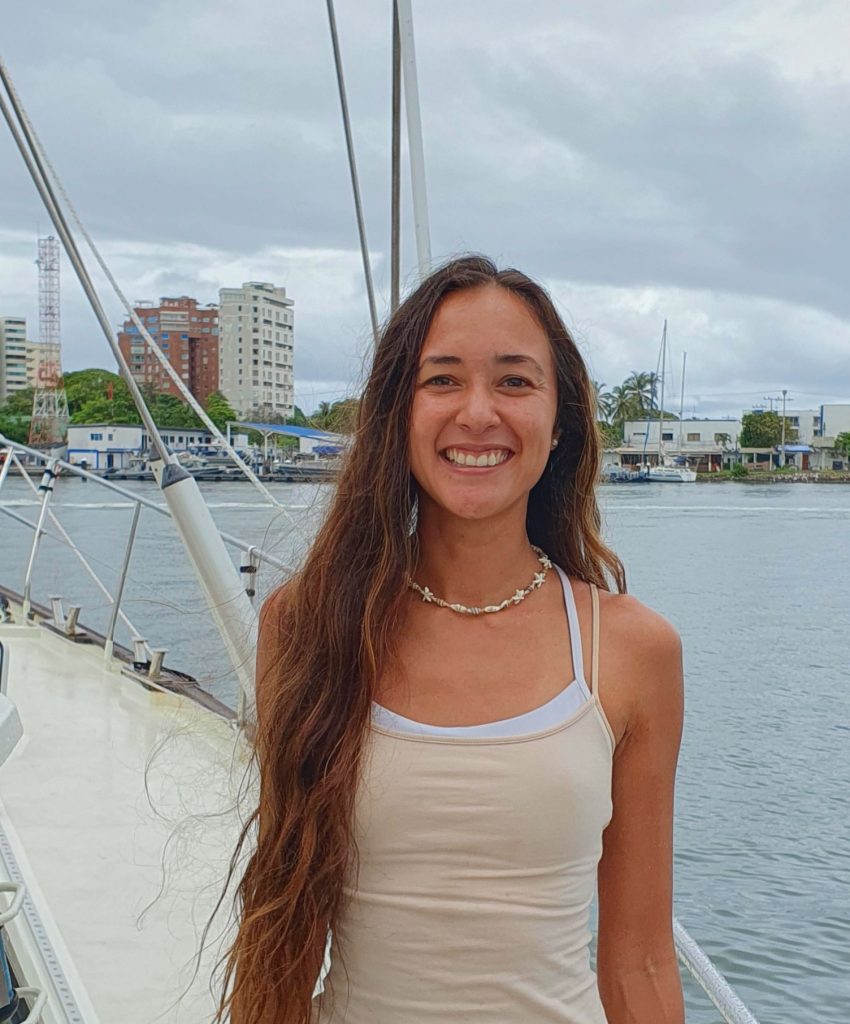
The Northwest Passage – an alumni project on the edge of the Arctic
For centuries, the Northwest Passage has fascinated explorers, researchers and historians alike. The route, which connects the Atlantic and Pacific Oceans north of North America, was long an unattainable dream, defined by ice, extreme weather conditions and immense human sacrifice. For me, with a background in history, stories of the Arctic have always been more than tales of adventure. They speak to humanity’s relationship with nature, to power and resources, and to boundaries—both geographical and mental.
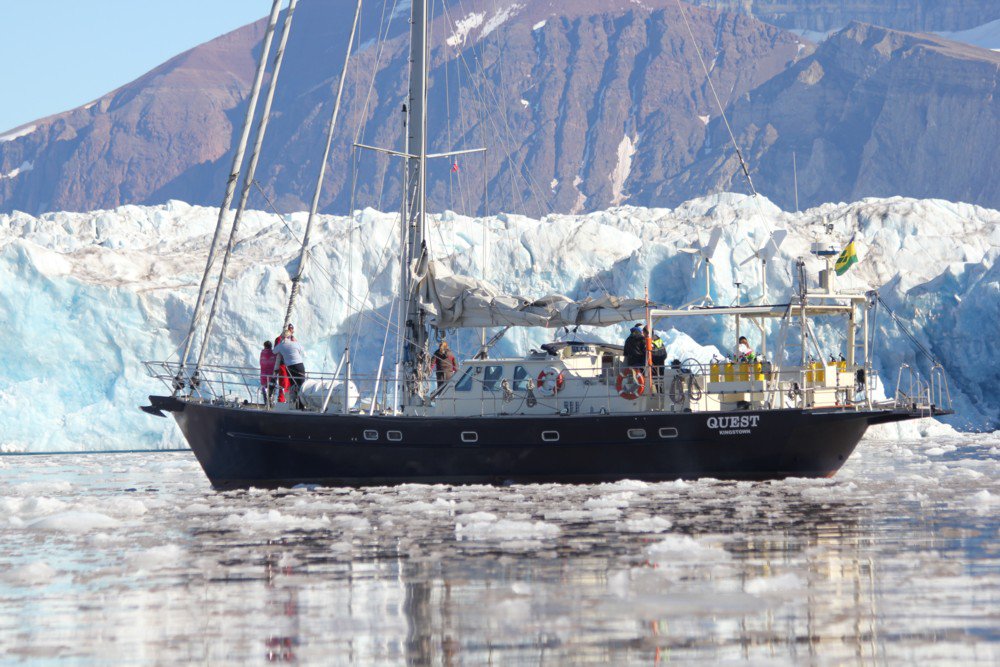
For us, the Northwest Passage is not merely a journey through ice and water, but a journey through history. We follow in the wake of explorers who pushed the limits of human endurance and curiosity. Beyond its historical significance, the Arctic is a place that inspires both awe and reflection. The landscape is vast and ever-changing, and we aim to experience the region with respect—for the place itself, for the people who live there, and for the forces shaping its future.
A project beyond comfort
On board, all participants are part of the crew. This involves watchkeeping, cooking, and sharing responsibility for daily life at sea. The Northwest Passage presents particular challenges. Ice conditions can change rapidly, distances are vast, and access to assistance is limited. For this reason, we view the expedition as a context in which knowledge, judgement and human cooperation are essential. It is not a journey for those seeking comfort, but for those who wish to be present, contribute and learn.
Life on board is structured to accommodate both seamanship and in-depth project work. The expedition is designed to allow ample time for research, observation, documentation and independent work. Duties are organised in rotating schedules, creating predictable periods of uninterrupted time that make it possible to plan and pursue individual projects.
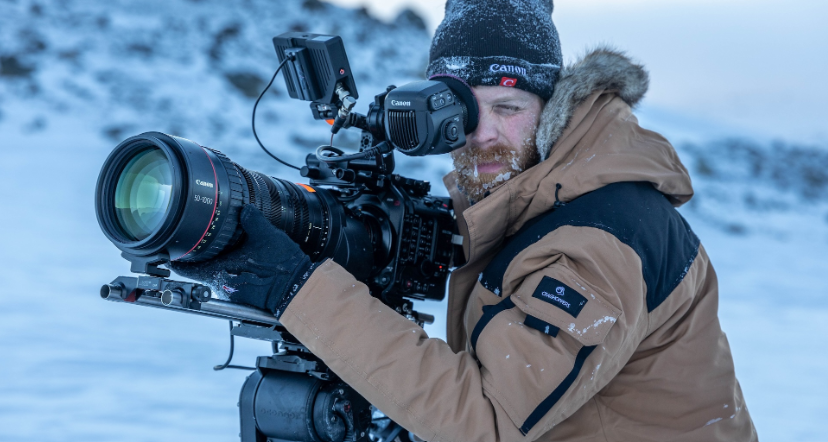
The expedition will be followed by the British production company Wild Films, which will document the journey with the ambition of developing the material into a documentary. While the final format of the film has yet to be determined, the history of the Northwest Passage is a clear point of departure—set in dialogue with contemporary questions about the Arctic, human presence, and a landscape in transition.
Who are we looking for?
We are seeking participants from a range of backgrounds, united by shared qualities: curiosity and a willingness to take responsibility. You do not need to be an experienced sailor, but you must be prepared to contribute, learn, collaborate and adapt to an environment that is not always predictable.
We particularly welcome individuals who wish to use the expedition as part of a larger project—documentation, research, writing or other forms of knowledge production. On board, there is space for conversation, reflection and the exchange of ideas. Through film, text and photography, we hope to contribute to broader discussions about knowledge, experience and the realities of polar regions, and to deepen understanding of a place few people have the opportunity to experience.
An alumni project—in the broadest sense of the word
Carrying out an expedition through the Northwest Passage is, in practice, a logistical, human and intellectual undertaking. Academic curiosity has followed me to sea. The expeditions we conduct today are, at their core, learning processes—where practical experience, historical knowledge and contemporary issues intersect. This is something I strongly associate with my time at university and my years as a teacher: the courage to think ambitiously, to place experiences in a wider context, to work long-term, and to take knowledge seriously—even beyond the classroom.
Preparations for the expedition are not solely practical and logistical. A significant part of the work consists of independent study of Arctic history, geopolitics, socio-economic conditions and Indigenous perspectives. This is an ongoing process of knowledge-building that spans several years and informs how we plan, communicate and relate to the places and people we encounter. For me, this is a natural extension of an academic approach, where curiosity, source criticism and context remain central—even outside the boundaries of the university.
I hope this project can inspire other alumni to pursue their own, sometimes unexpected, paths. Learning does not end at graduation. In our case, it continues amid the ice, sails set, and a course laid northwards.
Register your interest
Send an email to: questoceanexpeditions@gmail.com
Or a message via WhatsApp: +46 735 912 591
Specific information about the Northwest Passage can be found here:
https://www.quest-oceanexpeditions.com/northwest-passage
Please note: It is during the seasonal ice melt that a time window opens for navigating the passage—typically lasting one to two months, most often from late July to mid-September, depending on ice and weather conditions. Participants are expected to be in Nuuk around 25 July 2027 for safety briefings and training, although the exact date has not yet been confirmed. Departure is planned for late July.