

In this edition of Alum to Alum, we share a guest contribution from Jörgen Held, a fellow Lund alumnus (LTH), who writes about developments in renewable energy gas technology. Jörgen, who studied at the Faculty of Engineering, LTH, co-founded the International Conference on Renewable Energy Gas Technology (REGATEC), a platform that brings together experts from across Europe and beyond. As the conference prepares for its 12th and final edition in Lund, he reflects on the journey, key insights and the role of biomethane in the evolving energy landscape. Whether you work in biogas, gasification, power-to-gas or are simply interested in energy innovation, this story offers an engaging perspective.
Guestwriter Jörgen Held
Jörgen Held, 60, lives in Lund and is an alumnus from the Faculty of Engineering, LTH, where he studied Mechanical Engineering from 1989 to 1993. He earned his PhD in Fluid Mechanics in 1999 at the Division of Heat and Power Technology. Together with his professor, he developed the Dynamic Divergence Model (DDM), a turbulence model that still bears their names.
He is currently the CEO of Renewtec AB and the Baltic Energy Innovation Centre. His previous roles include CEO of the Swedish Gas Technology Centre, head of research at CEDER in Spain and research manager at the Swedish Energy Agency.
From LTH to the World: My Journey with REGATEC
In 2014, I co-founded the International Conference on Renewable Energy Gas Technology (REGATEC) together with Professor Frank Scholwin from the Institute of Biogas, Waste Management & Energy. As an alumnus of LTH, where I earned both my MSc and PhD, it felt natural to create a platform that could bring together experts from anaerobic digestion, biomass gasification and power-to-gas sectors.
Why REGATEC?
Our goal was to foster collaboration and highlight synergies between these three conversion routes for renewable methane. For example, excess heat from biomass gasification can be used to heat an anaerobic digester, regenerate the liquid used in chemical CO₂ absorption during biogas upgrading, and dry the digestate. CO₂ separated during upgrading can also be used as feedstock in power-to-methane processes.
REGATEC Returns to Lund – Join and share valuable insights
Since its launch in Malmö in 2014, REGATEC has grown into a truly international conference, bringing together experts from across Europe and beyond. Over the years, the event has taken place in cities like Barcelona, Verona, Toulouse, Berlin and Weimar – always with the goal of fostering collaboration across the renewable methane sector.
Now, the 12th and final edition of REGATEC returns to its roots in Lund, taking place 19-20 May 2026 at Scandic Star. If you work in biogas, gasification or power-to-gas, this is a unique opportunity to share valuable insights.
Read more about the conference here
Mission Accomplished
Over the years, REGATEC has brought together leading international experts, and today we’re seeing commercial facilities that combine anaerobic digestion and power-to-gas technologies. That’s why we’ve decided to conclude the conference series with the 12th edition – the mission is accomplished.
A Quick Primer on Renewable Methane
In anaerobic digestion, microbes break down organic waste into methane and CO₂. After cleaning out impurities like hydrogen sulfide, the biogas is upgraded to biomethane. In Sweden, it must contain 97% methane to meet the standard for grid injection or vehicle fuel.
Biomass gasification, when oxygen-blown or indirect, produces synthesis gas free of nitrogen. After cleaning, the CO is converted to methane via the reaction:
CO + 3H₂ → CH₄ + H₂O
In power-to-methane, surplus electricity is used to split water into hydrogen and oxygen. The hydrogen is then combined with CO₂ to form methane:
CO₂ + 4H₂ → CH₄ + 2H₂O
A Memorable Moment
One unforgettable moment was in 2014 when the China National Environmental Protection Corporation participated as a Gold Sponsor. They paid their fee in a brown envelope filled with small banknotes – it weighed at least half a kilo!
Biomethane: A Super-Multi-Kinder Egg
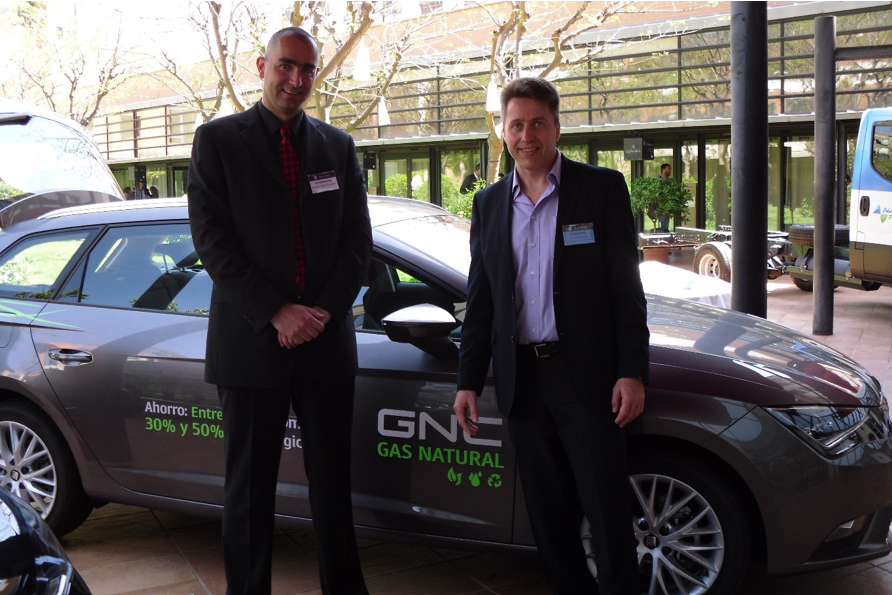
Biomethane is the only commercially available fuel that can deliver negative emissions from a life-cycle perspective. It allows fast refueling, long driving ranges and is produced 24/7 regardless of weather. It’s storable, distributable via existing infrastructure and brings socio-economic benefits like:
*Improved air quality (especially when replacing diesel)
*Better waste management
*Reduced eutrophication (especially when digesting manure)
*Nutrient recycling
*Energy self-sufficiency and organic fertilizer production
*Diversification and resilience in the energy system
The 12th and final edition of REGATEC is coming back to where it all began – Lund, 19-20 May 2026 at Scandic Star. Professionals working in biogas, gasification or power-to-gas are invited to register now and be part of a unique forum for knowledge exchange and collaboration.